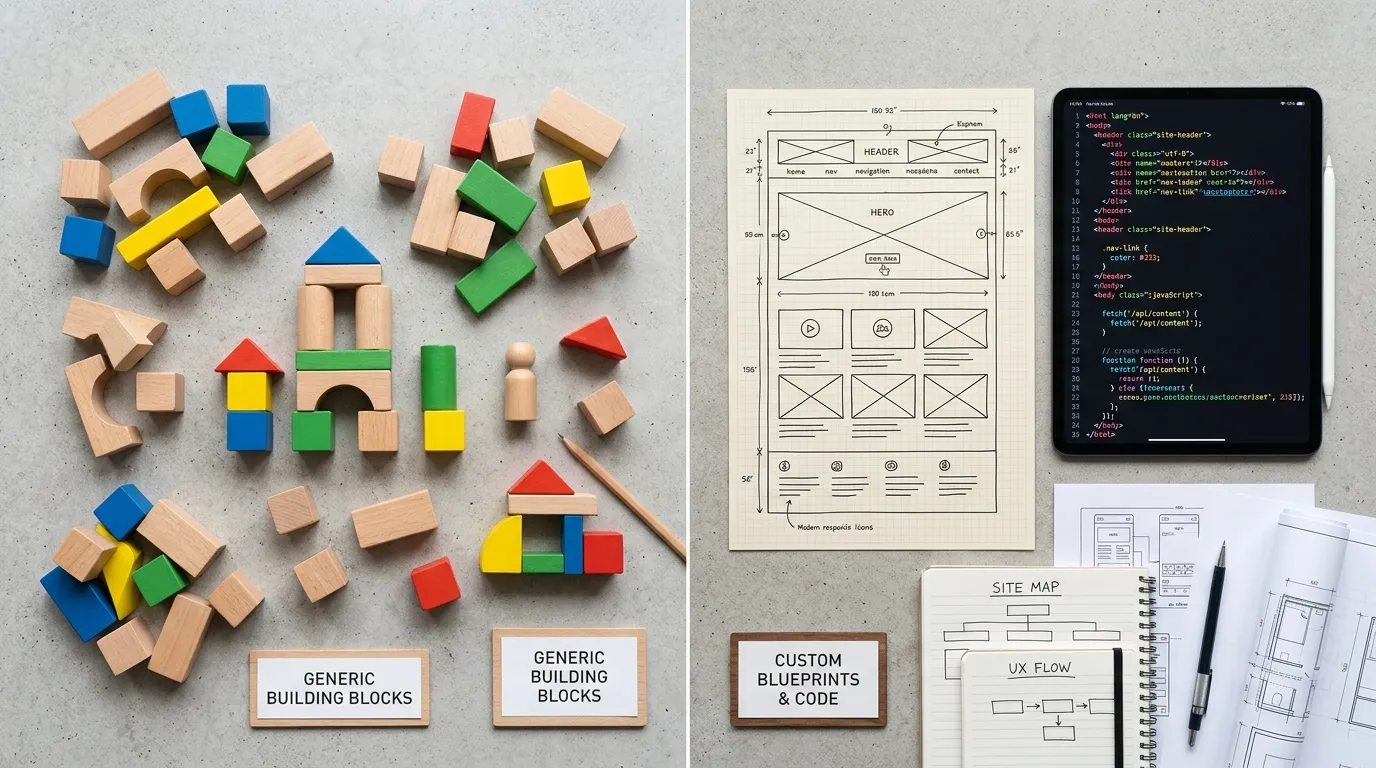
When an organization decides it needs a new website, the first question the board or executive leadership often asks is: "Can't we just buy a $60 template or use a quick website builder?"
It's a fair question. Commercial marketplace themes and drag-and-drop website builders look breathtaking in live demos. But when non-technical staff try to shoehorn real-world nonprofit programs, donation tiers, and volunteer workflows into rigid pre-made templates, the hidden costs quickly surface.
"A template forces your mission to fit into someone else's generic layout. Custom development designs the technology around the exact behavior of your donors and community."
The 4 Hidden Traps of Pre-Made Nonprofit Templates
1. Code Bloat and Crippled Mobile Speed
Commercial themes are built to be all things to all buyers. They ship with dozens of sliders, animation libraries, and megamenu scripts you will never use. This excessive code slows page load speeds down to 4–6 seconds on mobile devices, directly hurting your Google search rankings and causing prospective donors to bounce.
2. High Accessibility and Legal Exposure
Most marketplace themes fail basic WCAG 2.2 AA accessibility requirements. They often feature low-contrast gray text, unclickable touch targets on mobile, missing ARIA landmark roles, and keyboard navigation traps that expose your nonprofit to ADA compliance risk.
3. Fragile Plugin Stacks and Breakages
To make a generic template function like a nonprofit site, organizations often install 25+ third-party plugins (one for donations, one for events, one for forms, one for popups). Every plugin update carries the risk of breaking another part of the site, creating perpetual anxiety for staff.
4. Inflexible Content Workflows for Staff
When staff need to launch a new emergency relief campaign or update an impact metric, rigid templates either break or require complex custom CSS tweaks that non-technical team members cannot manage safely.
The Custom Architecture Advantage
A custom-built nonprofit website is engineered as a long-term institutional asset:
- Built on Custom Block Themes: Clean Gutenberg block patterns that allow staff to assemble beautiful, brand-compliant pages in minutes with zero risk of breaking site layout.
- Sub-Second Loading Speeds: Only the exact CSS and JavaScript your pages need are loaded, maximizing donation conversion rates.
- WCAG 2.2 AA Compliance from Day One: Semantic HTML, keyboard-navigable forms, and screen-reader tested components.
- Clean CRM Integrations: Direct API connections to Salesforce NPSP, Bloomerang, or Little Green Light without fragile middleware.
When Does a Template Make Sense?
If you are an all-volunteer startup nonprofit with an annual budget under $10,000 and fewer than 100 monthly visitors, a simple Squarespace or basic template is a completely sensible starting point. But once your organization relies on digital fundraising, grant credibility, and recurring community engagement, investing in custom web architecture pays for itself within the first few major campaigns.
Considering custom development for your organization?
Let's evaluate your current site performance, tech stack, and growth goals to see if custom architecture makes sense.
Schedule a Free Technical Evaluation