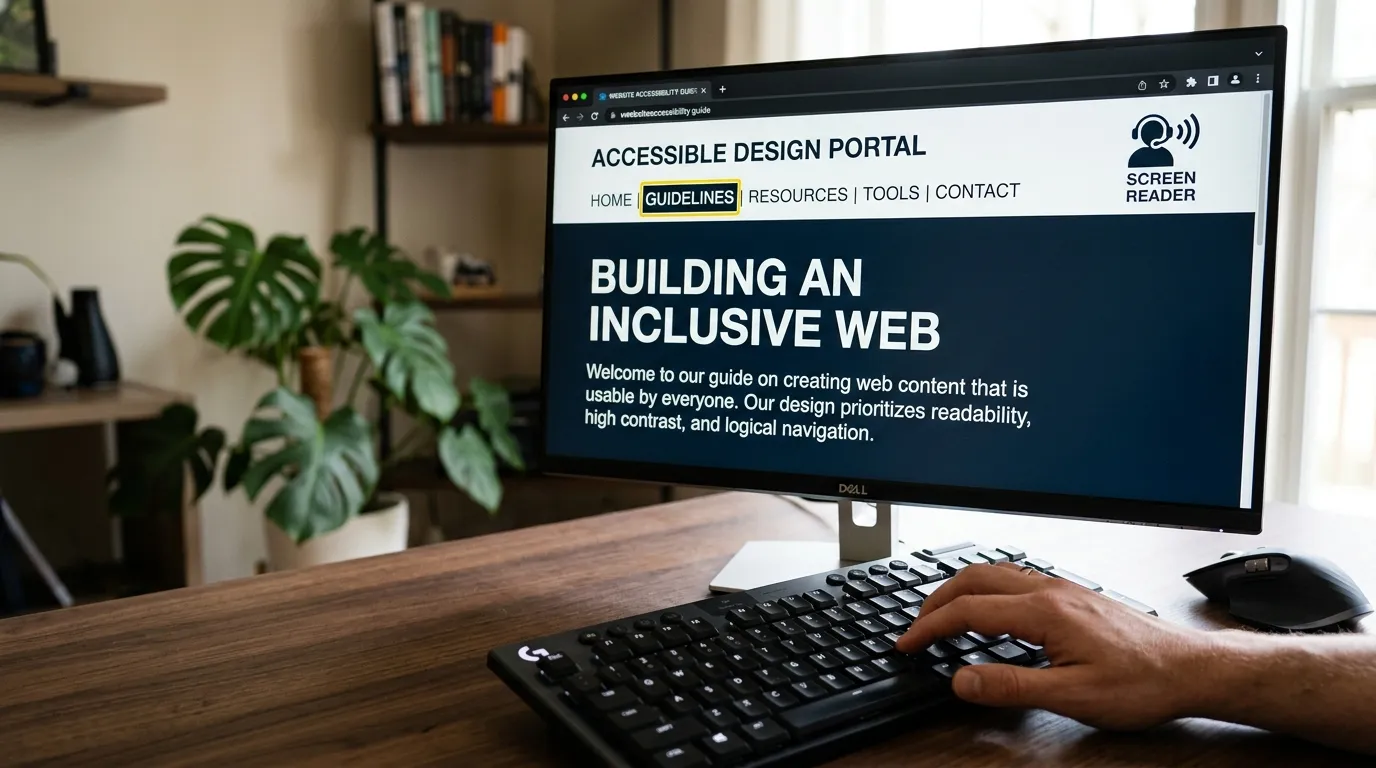
Many web development agencies claim to build "accessible websites", but when audited, their code is riddled with keyboard navigation traps, missing ARIA state management, and reliance on automated widget overlays. For a nonprofit, accessibility is not a marketing checkbox—it is a core reflection of your values.
When you hire an accessible web developer, you need an engineer who tests with screen readers daily, understands Section 508 and WCAG 2.2 AA criteria, and designs with trauma-informed UX principles.
"Ask candidate developers: 'How do you test your code with screen readers?' If they only mention automated Lighthouse scans, they are not accessibility specialists."
5 Questions to Vet an Accessible Web Developer
1. Do you test manually with screen readers?
Look for hands-on experience using NVDA (Windows), JAWS, or VoiceOver (macOS/iOS) to navigate complex forms and modals.
2. How do you handle focus management on dynamic content?
They should explain how they manage DOM focus when search modals open, filters update, or donation errors trigger.
3. What is your stance on accessibility overlay widgets?
A true accessibility professional will never recommend overlay widgets (like UserWay or accessiBe), as they do not resolve underlying code barriers.
4. Can you provide a VPAT / Accessibility Conformance Report?
Ask if they can author an official Voluntary Product Accessibility Template (VPAT) to document your site’s conformance for government and foundation grants.
5. How do you balance aesthetics with strict color contrast?
They should demonstrate how to maintain rich brand beauty while achieving 4.5:1 text contrast and 3:1 graphical element contrast.
Looking for an MSW-trained accessible web developer?
Web4Cause designs universally accessible, WCAG 2.2 AA compliant websites for mission-driven organizations.
Hire an Accessible Developer